APEX Column
APEX Column
Brought to you by APEX Plastic Surgery
Explore plastic surgery insights and stories.
Bulbous Nose, Hump Nose, Deviated Nose, and Upturned Nose Rhinoplasty: Why the Surgical Approach Differs by Nose Shape
Date : 2026-10-22
Views : 19
Rhinoplasty is not merely about raising the nasal bridge. Hump nose and deviated nose surgeries primarily address the bones and cartilage of the bridge; long and upturned nose surgeries adjust the position of the tip cartilage; and bulbous nose surgery focuses on the nasal tip cartilage and subcutaneous tissue. The target areas and surgical techniques vary depending on the shape of the nose.
Located in the very center of the face, the nose is a feature where even subtle changes can dramatically alter one's overall impression. Just as every face is unique, nasal shapes vary widely—including hump noses, deviated noses, long (arrow) noses, short (upturned) noses, and bulbous noses—and surgical techniques vary accordingly. Moreover, the nose has a surprisingly complex structure, serving not only an aesthetic role but also an essential respiratory function. Here is an overview of which anatomical areas are assessed, which surgical methods are considered for each nose shape, and what is evaluated during a consultation.
AI-generated image for illustrative purposes.
The Target Areas Differ Depending on the Nose Shape
When people think of rhinoplasty, elevating a low nasal bridge is often the first thing that comes to mind. However, nasal concerns involve not just height, but also the contour of the bridge, the length and angle of the nose, and the width of the tip and alar base. Depending on the specific concern, the surgical target areas can be categorized as follows:
- Hump Nose — A nose with a protrusion in the middle of the bridge, where the protruding nasal bone and cartilage are trimmed (Hump Nose Rhinoplasty)
- Crooked Nose — A nose where the nasal bone or cartilage is deviated to one side, where the nasal bone and nasal septum (the central internal dividing wall) are straightened (Deviated Nose Rhinoplasty)
- Long Nose / Arrow Nose — A nose that appears long due to a drooping tip, where the drooping tip cartilage is elevated and the elongated septum is reduced (Long Nose / Arrow Nose Rhinoplasty)
- Short Nose / Upturned Nose — A nose that is short and upturned with significant nostril exposure, where the tip cartilage is lowered or cartilage is grafted to adjust the length (Short Nose / Upturned Nose Rhinoplasty)
- Bulbous Nose — A nose with a blunt, wide tip, where the tip cartilages are gathered and thick subcutaneous tissue is debulked (Bulbous Nose Rhinoplasty·Alar Reduction)
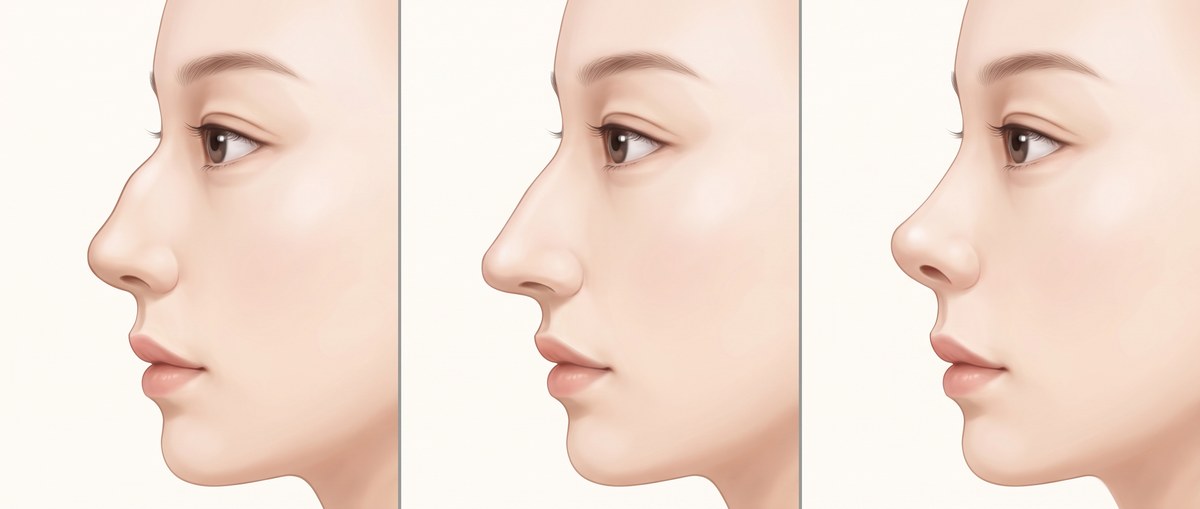
Three nasal profiles viewed from the side. From left: a hump nose, a long (arrow) nose with a drooping tip, and a short (upturned) nose with an elevated tip showing the nostrils. This is an AI-generated illustration for explanatory purposes.
The criteria considered when determining the height of the bridge and tip were covered in the Nasal Tip Skin Limit Column, and elevating the nose using autologous tissue without silicone in the No-Implant Rhinoplasty Column. This time, we examine cases where the concern is shape rather than height.
Here is the key point — Even within rhinoplasty, the target areas differ depending on the nose shape, so it is essential to first identify the underlying source of your nasal concern.
For a Hump Nose, the Protruding Bridge Is Refined
A hump nose is characterized by an overgrowth of nasal bone and septal cartilage, causing the middle of the bridge to protrude. It can be caused by genetic factors or strong trauma to the nose during growth periods. It often leads to concerns about an uneven profile or a harsh facial impression.

A lateral profile illustration of the bone and cartilage of a hump nose. The area highlighted in dark pink indicates the section to be refined, the extent of which varies according to the severity of the hump.
- In mild hump cases — The protruding area is rasped and smoothed with surgical instruments. Because simply rasping the hump can cause it to become prominent again, it is usually combined with an osteotomy and partial resection of the septal cartilage.
- In severe hump cases — Because rasping alone is insufficient, the protruding nasal bone and cartilage are resected where they meet. At this point, the roof of the nasal bridge becomes open (open roof deformity), so the nasal bones on both sides are mobilized inward via osteotomy to close the gap.
A hump nose often coexists with a long nose that has a drooping tip. Therefore, the bridge and tip are analyzed together to determine the surgical scope.
For a Deviated Nose, the Nasal Bone and Septum Are Straightened
A deviated nose is one where asymmetry has developed in the nasal bone or cartilage due to congenital factors or trauma. Not only can it disrupt facial balance, but if the nasal septum—the central dividing wall inside the nose—is also deviated, it can cause breathing difficulties or frequent nasal congestion. For this reason, a deviated nose requires evaluating internal nasal structures alongside external appearance.
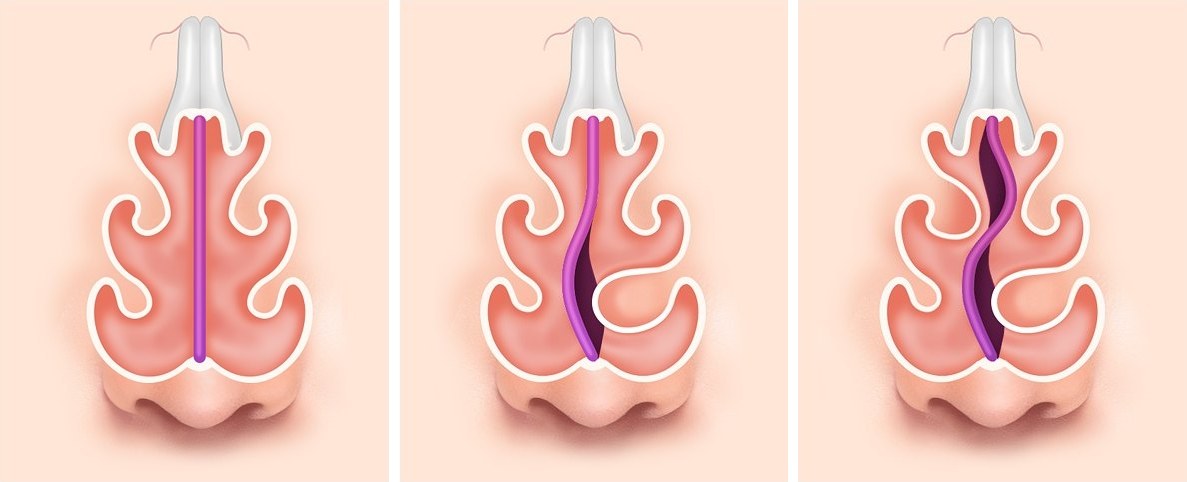
A frontal cross-sectional illustration of the nasal cavity. From left: a straight septum, a septum with a lower C-shaped deviation, and a septum with an S-shaped deviation curving both superiorly and inferiorly.
In cases of severe deviation, the upper nasal bones, cartilages, and the supporting septal cartilage underneath are frequently all deviated together. Since the nasal bones are usually displaced as well, an osteotomy is performed to reposition the nasal bones and correct the deviated cartilage.
- When the nasal bone is deviated — Medial and lateral osteotomies are performed on the curved nasal bones to realign them upright. If the surface of the nasal bone is irregular, additional osteotomy is performed to smooth and flatten it.
- When the septal cartilage is deviated — A portion of the deviated area is resected and straightened, and cartilage is grafted onto the bent section to achieve proper alignment.
For Long and Upturned Noses, Length Is Adjusted via Tip Cartilage Positioning
Concerns regarding nasal length and angulation generally fall into two categories: a long (arrow) nose with a drooping tip, and a short (upturned) nose with an elevated tip. Evaluation includes assessing whether the nose is disproportionately long or short relative to facial proportions and examining the nasolabial angle between the nasal tip and the upper lip. In both cases, the position of the alar cartilages forming the nasal tip is adjusted to achieve a length tailored to facial proportions.
A long or arrow nose is mostly caused by excessive development of the cartilage supporting the nostrils; a drooping tip can make the face look elongated or give a sharp impression.
- Alar Cartilage Resection and Resuturing — A portion of the drooping alar cartilage is excised, and the tip cartilage is elevated and secured.
- Cartilage Strut and Tip Cartilage Repositioning — A strut is erected using cartilage, and the downward-drooping alar cartilages are elevated and fixed to the strut.
A short or upturned nose is characterized by noticeable nostrils from the front view or a wide angle between the subnasale and the upper lip. This can result from an inherently short nasal framework or from tissue contracture following previous rhinoplasty. If only an implant is inserted to heighten an already short nose, the deficient tissue can pull the nasal tip upward even further, resulting in an unnatural appearance. Therefore, the skin, cartilage, and septum must be evaluated and corrected together.
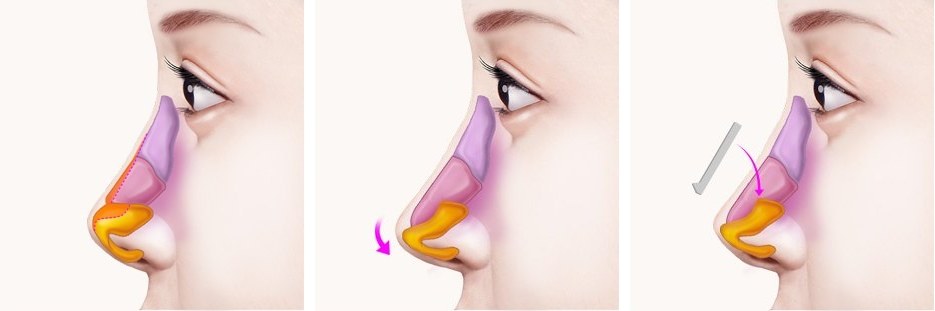
Illustrations of short nose correction. From left to right: dissection of the alar cartilages at the nasal tip, derotation and downward fixation of the alar cartilages, and cartilage grafting to lengthen the tip; the exact approach varies by individual.
- Cartilage Reshaping — The upper portion of the cephalically positioned alar cartilage is excised and repositioned downward, lowering the nasal tip and lengthening the nose.
- Cartilage Grafting — When the columella sits higher than the alar rims, autologous tissue such as ear cartilage or septal cartilage is grafted between the septum and alar cartilages to lower the tip.
- Combining with Augmentation Rhinoplasty — If greater height is desired, augmentation rhinoplasty can be performed concurrently, placing an implant along the nasal bridge and autologous tissue at the tip.
Bulbous Noses: Refining Tip Cartilage and Subcutaneous Tissue
A bulbous nose features a blunt, rounded, and flared nasal tip. In Asians, the lower lateral cartilages tend to be thin while the overlying skin is thick, making bulbous noses relatively common. Because the surgical approach differs depending on the underlying cause, the condition of the alar cartilages, skin, and subcutaneous tissue is assessed first.
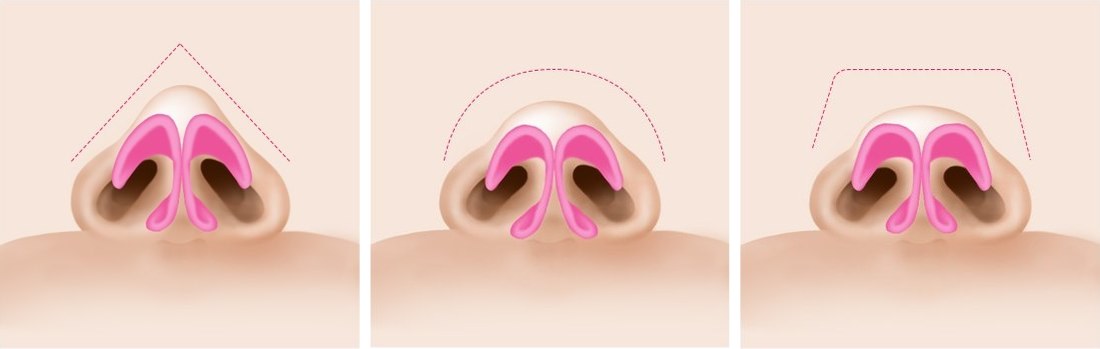
An illustration of the nasal tip viewed from the front, with the alar cartilages highlighted in pink. From left to right: a typical nasal tip, a bulbous tip with thick subcutaneous tissue, and a bulbous tip with large, widely spaced alar cartilages.
- When the alar cartilages are large — Taking overall facial proportions into account, the cephalic margin of the alar cartilages is appropriately excised, and the separated cartilages are sutured together to refine the tip.
- When the alar cartilage is spread apart — The separated alar cartilages are brought together and sutured. If additional tip projection is desired, autologous tissue may also be added.
- When subcutaneous tissue is thick — An appropriate amount of adipose and subcutaneous tissue at the nasal tip is excised.
If the alar base is excessively flared, alar reduction can be considered. Alar reduction is performed either by excising a wedge of skin at the base of each nostril and suturing it closed, or by cinching the alar bases inward with sutures. Rather than simply narrowing the nostrils as much as possible, it is essential to achieve a width that harmonizes with facial proportions while ensuring nostril symmetry.
Open Rhinoplasty Is Considered for Significant Structural Changes
When the nasal shape requires major restructuring—such as for a crooked nose, a significant change in length, or a severe dorsal hump—an open rhinoplasty is considered, making incisions inside the nostrils and across the columella to operate under direct visualization of the underlying bone and cartilage. The closed approach, which utilizes incisions solely inside the nostrils, is reserved for cases requiring limited correction. The differences between these two methods are detailed in our Nasal Tip Skin Limit Column.
APEX Plastic Surgery's Hump Nose·Crooked Nose·Long / Droopy Nose·Short / Upturned Nose·Bulbous Nose·Alar Reduction standards. The actual method is determined after an examination.
Please keep in mind — Potential postoperative complications include bleeding, infection, inflammation, scarring, asymmetry, nasal obstruction, and resorption or warping of grafted cartilage. When an implant is used, complications such as capsular contracture (where tissue around the implant hardens and contracts) or implant visibility may occur. Swelling, bruising, and the recovery process vary by individual. Specific precautions will be explained in detail during your consultation.
There Is No 'Ready-to-Wear' in Rhinoplasty
“Even among Asians, facial features vary by region, and even identical twins have subtle differences in facial contours and feature balance. Applying a uniform standard of what is commonly labeled an 'attractive nose' without considering the patient's individual features and overall balance inevitably compromises satisfaction. There can be no 'ready-to-wear' in rhinoplasty.” — Lead Surgeon Song Hyun-seok
Frequently Asked Questions
If I have both a dorsal hump and a long nose, can they be corrected together?
A dorsal hump frequently coexists with a drooping tip (arrow nose), so the surgical scope is determined by evaluating both the bridge and the tip simultaneously. Whether to correct them together is determined after an in-person consultation.
If a bulbous nose features wide alar flaring, alar reduction may be combined; if you wish to increase nasal height while correcting an upturned nose, augmentation rhinoplasty can also be considered.
Can't I just file down the hump slightly?
If the hump is mild, the protruding area can be rasped smooth. However, simply filing it down may cause the hump to become prominent again, so an osteotomy is commonly performed alongside resection of the septal cartilage.
For a severe hump, the protruding nasal bone and cartilage are excised, and the nasal bones on both sides are repositioned inward to close the open roof.
My nose is crooked and often congested—will only the external shape be corrected?
A crooked nose is frequently accompanied by a deviated septum that obstructs breathing; therefore, the surgical plan is formulated by thoroughly evaluating both the external appearance and internal structural anatomy.
For an upturned nose, can't you just raise the bridge with an implant?
If only an implant is inserted into a short nose, the deficient tissue can pull the tip upward even further, creating an unnatural result. Therefore, nasal length must first be corrected by repositioning the alar cartilages or placing cartilage grafts.
If an upturned nose developed due to implant contracture after a previous rhinoplasty, the underlying cause is identified first before selecting the surgical approach (Revision Rhinoplasty).
What are the surgery duration and recovery period?
At APEX Plastic Surgery, surgery takes approximately 1 hour 30 minutes to 2 hours for hump and long/arrow nose rhinoplasty; 2 hours to 2 hours 30 minutes for short/upturned, crooked, and bulbous nose rhinoplasty; and about 30 minutes for alar reduction.
Alar reduction is performed under local or IV sedation anesthesia, while the other procedures are performed under IV sedation, with no hospitalization required. Stitch removal occurs at 7 days, with 2 to 3 follow-up visits and a recovery period of approximately 7 to 10 days. For severe humps, general anesthesia may be utilized. These details may vary depending on patient condition and surgical technique.
We Address the Underlying Cause Before Nasal Height
What we examine first during consultation
- Nasal bridge — Presence of a hump, or deviation of the nasal bone or cartilage
- Nasal length and angle — Whether the tip is drooping or upturned, and the degree of nostril show
- Nasal tip and alae — Size and separation of the alar cartilages, thickness of skin and subcutaneous tissue, and alar width
- Breathing — Presence of nasal obstruction or breathing discomfort
- Prior surgeries — History of previous nasal surgeries
- Facial harmony — Harmony of the nose with overall facial proportions and impression
At APEX Plastic Surgery, board-certified plastic surgeon Dr. Song Hyun-seok provides all consultations and treatments.
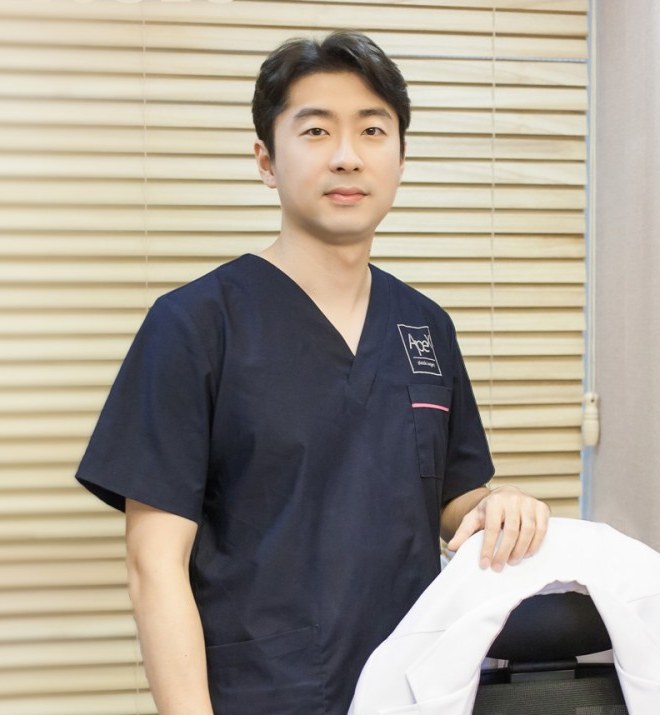
Song Hyun-seok, Head Director · Board-Certified Plastic Surgeon, Ph.D.
This post is intended solely for medical informational purposes, does not guarantee specific therapeutic outcomes, and cannot replace a medical consultation with a physician. The featured image and profile illustration are AI-generated for illustrative purposes and do not depict real persons; the remaining nasal diagrams are explanatory illustrations as well. None of the images in this post are before-and-after comparison photos. Surgical duration, anesthesia, and recovery times are based on procedure guidelines from the APEX Plastic Surgery website and may vary by individual. As with any surgical procedure, common potential complications such as postoperative bleeding, infection, and inflammation may vary in severity from person to person, requiring appropriate care. Please ensure thorough consultation, explanation, and informed consent prior to surgery.
APEX CUSTOMER CENTER
Phone number :
02-3453-7907
Clinic Hours
Weekdays
AM 10 : 00 ~ PM 7 : 00
Saturday
AM 10 : 00 ~ PM 4 : 00
(Closed Sundays and holidays)
Subway Line 2, Yeoksam Station Exit 4, Hanjungang Building 3F
The two buildings are adjoined; please enter through the right-hand door.
(The right-hand building with KT on the 1st floor)
How do I make a reservation?
You can book by phone at our main number, 02-3453-7907.
Can I get a consultation in Japanese?
You can reach us via our official Instagram (@apexjapan_official) or X (@apex_surgery).
日本 SNS

Clinic Name : APEX Plastic Surgery
Address : 3F Hanjungang Bldg., 139-1 Teheran-ro, Gangnam-gu, Seoul (646-7 Yeoksam-dong)
CEO : Song Hyun-seok Business Registration No. : 220-10-15955 TEL : 02-3453-7907 FAX : 02-3453-7908
Copyright ⓒ 2026 APEX Plastic Surgery. ALL Rights Reserved.
Apex
[Summit, top]
APEX means ‘the summit,’ ‘the very top.’
with the finest medical technology and a systematized surgical process
our commitment to uncovering the hidden beauty unique to each patient
It embodies the spirit of APEX Plastic Surgery.


