APEX Column
APEX Column
Brought to you by APEX Plastic Surgery
Explore plastic surgery insights and stories.
No-Implant Rhinoplasty: What to Know When Augmenting the Nose with Autologous Tissue Without Silicone
Date : 2026-10-15
Views : 57
No-implant rhinoplasty is a surgical procedure that shapes the nose using tissue harvested from your own body (autologous tissue)—such as ear cartilage, septal cartilage, costal cartilage, or fascia—instead of artificial implants like silicone. Each type of autologous tissue has different properties, so it is important to determine which tissue to use, where on the nose to place it, and how much to use according to your nose's condition.
In Asian rhinoplasty, many procedures focus on augmenting a low nose, often using artificial implants such as silicone or Gore-Tex for the nasal bridge and autologous cartilage for the nasal tip. However, those who feel reluctant to use artificial implants, worry that implants might show through thin skin, or are considering revision surgery due to inflammation or contracture after a previous procedure often look into rhinoplasty using only autologous tissue without implants. Here is an overview of which tissues are used in no-implant rhinoplasty and what you should know when making your choice.

AI-generated image for illustrative purposes.
Artificial Implants and Autologous Tissue Have Different Properties
Materials used to augment the nose are broadly divided into artificial implants and autologous tissue. The two materials differ in their uses, advantages, and disadvantages, so neither one is suitable for every nose.
Artificial Implants (Silicone, Gore-Tex, etc.)
- Uses — Primarily used to augment the nasal bridge
- Pros — Relatively easy to augment the nose, with straightforward shaping and design
- Cons — May cause a foreign body sensation, and complications such as infection, deformation, implant migration, or visible show-through can occur
Autologous Tissue (Ear cartilage, septal cartilage, costal cartilage, fascia, etc.)
- Uses — Used for various purposes, such as augmenting the nasal bridge or tip, or padding thin skin and soft tissue
- Pros — Because it is your own tissue, foreign body sensation is minimal and the touch feels natural
- Cons — Demanding to carve, the harvestable amount is limited depending on the individual, and part of it may be resorbed after grafting. Tissues harvested from outside the nose also require an incision at the donor site
That thin skin can cause implants to show through was also covered in our previous column, which addressed the skin limits of the nasal tip.
Where Is Autologous Tissue Harvested?
Autologous tissue used in rhinoplasty is primarily harvested from the ear, inside the nose, the ribs, and behind the ear. Each tissue differs in rigidity, elasticity, and harvestable volume, so their uses vary accordingly.
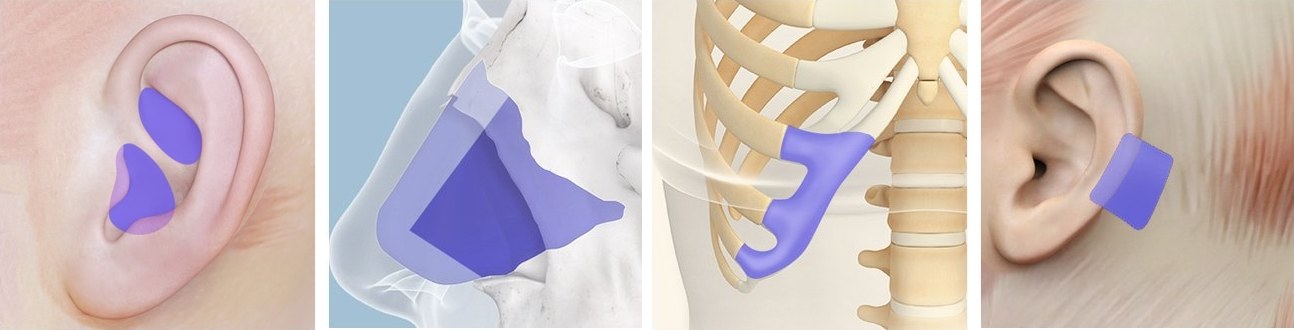
The areas marked in purple indicate the harvest sites: from left, ear cartilage, septal cartilage, costal cartilage, and fascia behind the ear.
- Ear Cartilage — Cartilage harvested from the ear. Curved and elastic, it is used to shape the nasal tip structure, or added when septal cartilage is insufficient.
- Septal Cartilage — Cartilage that divides the left and right sides in the center of the nose. It is trimmed and mainly used to elevate the nasal tip or extend nasal length; since it is harvested from inside the nose, no separate external incision is needed.
- Rib cartilage (costal cartilage) — Cartilage harvested from the rib area. With strong structural support and durability, and available in relatively ample amounts, it is considered when strong nasal support or a significant volume is needed.
- Fascia behind the ear — A membrane that wraps around muscle, primarily utilizing the fascia behind the ear. Wrapping an implant in fascia adds an extra protective layer between the implant and skin, making it a material mainly used when the skin is thin.
APEX Plastic Surgery's Implant-Free Rhinoplasty primarily uses fascia behind the ear among autologous tissues to elevate the nasal line, using autologous tissue tailored to the individual's condition.
Which Tissue to Use, Where, and How Much Is Key
Although autologous tissue comes from your own body, a portion of it may be resorbed during the process of engraftment (taking hold) after transplantation. Therefore, in autologous rhinoplasty, how well and how long the tissue is maintained without being resorbed after surgery is crucial.
You must select tissues suited to their purpose—such as using elastic, supportive cartilage to support the nasal tip, or fascia to reinforce thin skin. Even with the same tissue, the resulting shape varies depending on where and how much is placed, which requires experience in understanding and sculpting tissue properties.
Here is the key point — In autologous rhinoplasty, the key is which tissue to use, where on the nose to place it, and how much to use.
How Is No-Implant Rhinoplasty Performed?
Autologous dermis (fascia behind the ear) is harvested and delicately trimmed to suit the condition, then placed in the precise location to refine the shape of the nose. When shaping the nasal tip, the alar cartilage is dissected and the sculpted cartilage is grafted.
- Examination and Planning — The tissue to use and its volume are determined by assessing skin thickness, nasal bridge height, nasal tip cartilage condition, and any history of prior surgery.
- Autologous Tissue Harvesting — Harvest autologous dermis (fascia behind the ear).
- Trimming — Delicately trim the harvested tissue to match the individual condition.
- Alar Cartilage Dissection and Cartilage Grafting — Dissect the alar cartilage at the nasal tip and build the tip structure and strut with the sculpted cartilage.
- Spreader Graft — If necessary, cartilage is grafted onto the lower nasal bridge to adjust the height.
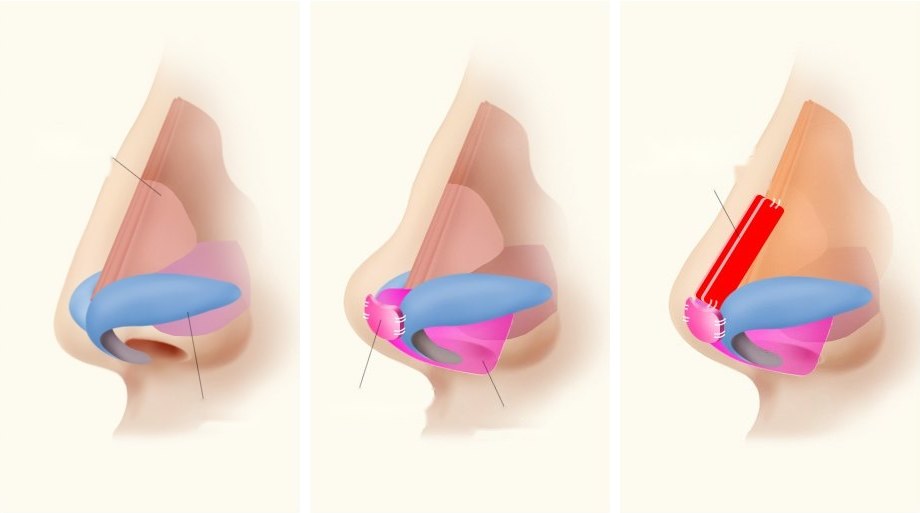
From left: alar cartilage dissection, nasal tip cartilage graft and columellar strut, and spreader graft stages. The actual procedure may vary depending on the individual.
APEX Plastic Surgery's Implant-Free Rhinoplasty standards. The actual method is determined after an examination.
When to Consider No-Implant Rhinoplasty
- If you are reluctant to use artificial implants
- If your skin is thin and an implant might show through
- When considering revision surgery due to inflammation or capsular contracture after a previous rhinoplasty
- When you desire a natural feel and nasal contour
However, the harvestable amount of autologous tissue may fall short of your desired height, or an alternative technique may be more suitable depending on the condition of your nose. Therefore, we examine the nasal condition and your aesthetic goals together during consultation before deciding.
Please keep in mind — Even when autologous tissue is used, post-operative complications such as bleeding, infection, inflammation, scarring, asymmetry, resorption or deformation of the graft, and pain or scarring at the donor site can occur. Swelling, bruising, the recovery process, and progress vary by individual. Specific precautions are explained in detail during your consultation.
Autologous tissue must also be selected according to the surgical objective
“The essence of plastic surgery is ‘restoration’ and ‘reconstruction,’ not ‘cosmetics.’ ... Among autologous body tissues, we must select tissues that suit the purpose of the procedure, and we must enhance not only our research into existing clinical cases but also our practical clinical experience.” — Song Hyun-seok, Lead Surgeon
Things to Check Before Deciding on Surgery
Regardless of which material is used, please check the following before making your decision.
- Specialist Care — Whether a board-certified plastic surgeon directly consults and operates
- Consultation with the Doctor — Whether a doctor, not a consultation manager or coordinator, examines you and determines the surgical plan
- Real Experience over Reviews — Whether you have heard from someone with actual experience, rather than relying solely on online reviews
- Discounts and Additional Procedures — Whether additional procedures are being recommended under the guise of discounts
- Conversation with Family — Whether your family empathizes with and agrees with your concerns
“One should also be aware that no plastic surgery procedure has permanent effects or can guarantee 100% safe and definitive results.” — Song Hyun-seok, Lead Surgeon
Frequently Asked Questions
What is no-implant rhinoplasty?
It is a surgery that reshapes the nose using autologous tissues harvested from your own body—such as ear cartilage, septal cartilage, costal cartilage, and fascia—without using artificial implants like silicone or Gore-Tex.
At APEX Plastic Surgery, postauricular fascia (fascia from behind the ear) is primarily used among autologous tissues, selecting the tissue best suited to each individual's condition.
Are there no side effects when using autologous tissue?
That is not true. Even with autologous tissue, complications such as bleeding, infection, inflammation, and asymmetry can occur; part of the graft may be resorbed or change shape, and pain or scarring may occur at the donor site.
As no surgery is 100% safe or guaranteed in outcome, we recommend making a decision only after a comprehensive consultation and explanation.
Does the transplanted autologous tissue not get resorbed?
Part of the grafted tissue may be resorbed during the engraftment process, and the extent varies depending on the tissue type and the individual.
That is why determining the right placement and volume according to the tissue's properties is crucial.
What material is used if the skin is thin?
If the skin is thin, the implant may show through. Postauricular fascia is primarily used when the skin is thin because wrapping the implant with fascia adds an extra layer of fascia between the implant and the skin.
The choice is made by evaluating both skin thickness and the desired height.
If inflammation occurred after silicone rhinoplasty, can revision surgery be performed using autologous tissue?
Even when considering revision surgery due to inflammation or contracture, no-implant rhinoplasty using autologous tissue is considered. The surgical approach is decided after evaluating the materials used in prior surgery, remaining cartilage, and skin condition.
APEX Plastic Surgery's Revision Rhinoplasty Please also refer to the guide.
What are the surgery duration and recovery period?
At APEX Plastic Surgery, no-implant rhinoplasty involves a surgery time of approximately 1 hour 30 minutes to 2 hours under IV sedation, requires no hospitalization, with suture removal after 7 days, 2–3 follow-up clinic visits, and a recovery period of about 7–10 days.
This may vary depending on the patient's condition and surgical technique.
Examining the Condition of Your Nose Before Choosing Materials
What we examine first during consultation
- Skin thickness — Whether implants might show through, and whether fascia reinforcement is needed
- Nasal framework and cartilage — Bridge height, nasal tip cartilage shape, and structural support
- Desired height and shape — The type and volume of tissue required accordingly
- Prior surgeries — Presence of implants, history of inflammation or contracture, and remaining cartilage
- Donor site for tissue harvesting — Where and how much tissue can be harvested, such as the ear, nasal interior, or ribs
- Facial harmony — Whether the nose harmonizes with overall facial balance
At APEX Plastic Surgery, board-certified plastic surgeon Dr. Song Hyun-seok provides all consultations and treatments.
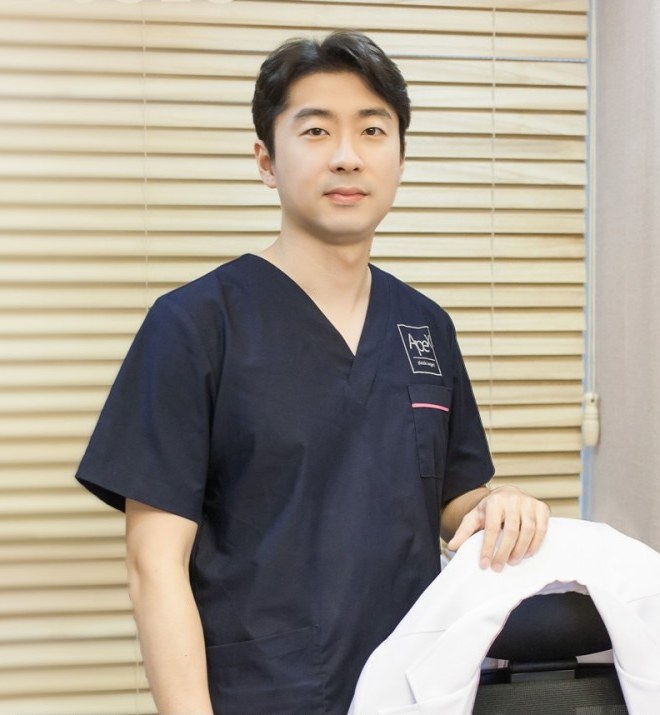
Song Hyun-seok, Head Director · Board-Certified Plastic Surgeon, Ph.D.
This post is intended for informational medical purposes, does not guarantee specific therapeutic results, and does not substitute for an evaluation by a physician. The featured image is an AI-generated image provided for illustration purposes, and the drawings of autologous tissues and nasal cross-sections are diagrams for explanatory purposes. None of the images in this article are before-and-after surgical comparison photos. Details such as surgery duration, anesthesia, and recovery time are based on general procedure guidelines on the APEX Plastic Surgery website and may vary by individual. As general post-operative complications such as bleeding, infection, and inflammation can vary in severity depending on the individual, caution is advised. Please ensure you receive a thorough consultation, explanation, and informed consent prior to surgery.
APEX CUSTOMER CENTER
Phone number :
02-3453-7907
Clinic Hours
Weekdays
AM 10 : 00 ~ PM 7 : 00
Saturday
AM 10 : 00 ~ PM 4 : 00
(Closed Sundays and holidays)
Subway Line 2, Yeoksam Station Exit 4, Hanjungang Building 3F
The two buildings are adjoined; please enter through the right-hand door.
(The right-hand building with KT on the 1st floor)
How do I make a reservation?
You can book by phone at our main number, 02-3453-7907.
Can I get a consultation in Japanese?
You can reach us via our official Instagram (@apexjapan_official) or X (@apex_surgery).
日本 SNS

Clinic Name : APEX Plastic Surgery
Address : 3F Hanjungang Bldg., 139-1 Teheran-ro, Gangnam-gu, Seoul (646-7 Yeoksam-dong)
CEO : Song Hyun-seok Business Registration No. : 220-10-15955 TEL : 02-3453-7907 FAX : 02-3453-7908
Copyright ⓒ 2026 APEX Plastic Surgery. ALL Rights Reserved.
Apex
[Summit, top]
APEX means ‘the summit,’ ‘the very top.’
with the finest medical technology and a systematized surgical process
our commitment to uncovering the hidden beauty unique to each patient
It embodies the spirit of APEX Plastic Surgery.


