APEX Column
APEX Column
Brought to you by APEX Plastic Surgery
Explore plastic surgery insights and stories.
What to Look for in an Eyelid Surgery Consultation: Sleepy, Heavy, and Upturned Eyes Have Different Causes
Date : 2026-11-05
Views : 115
In an eyelid surgery consultation, before deciding on a desired eye shape, we first determine why your eyes currently look the way they do. Sleepy-looking eyes, heavy-looking eyes, and upturned eyes have different causes, so the areas evaluated and the surgeries considered also differ.
Because the eyes greatly influence first impressions, even a subtle difference in the eye shape can change a person's entire facial impression. The concerns of those seeking an eyelid surgery consultation are diverse, including sleepy-looking eyes, heavy-looking eyes, sharp-looking upturned eyes, and aging eyes. However, not a few people take eyelid surgery lightly and attend consultations with a surgical method already predetermined. Even for the same concern, if the cause differs, the appropriate surgery also changes. Here, we examine what is checked during a consultation, what areas are assessed depending on your concern, and what is helpful to prepare beforehand.
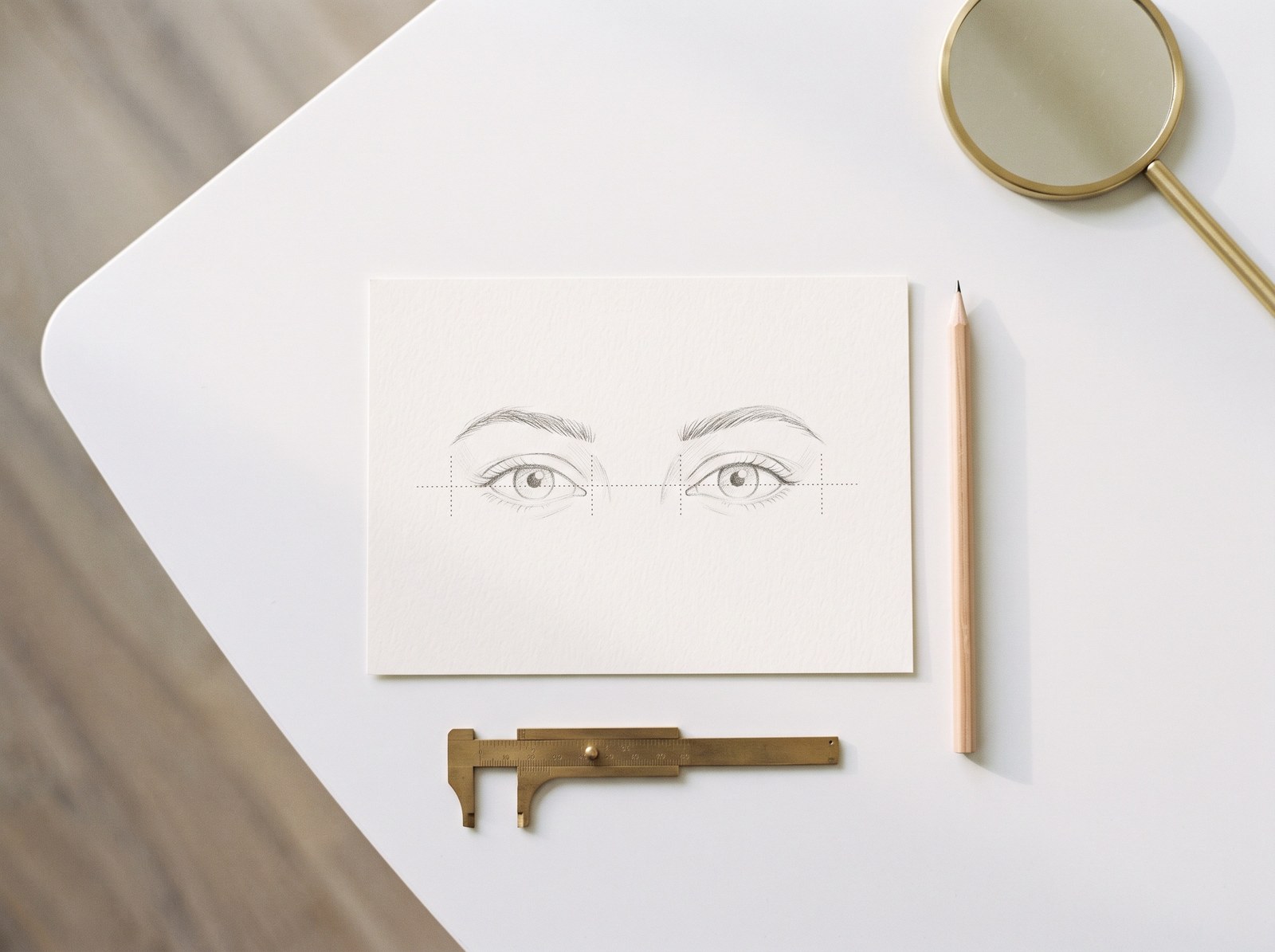
AI-generated image for illustrative purposes.
Even for the Same Concern, the Evaluated Areas Differ Depending on the Cause
A consultation begins with listening to your concerns. Even when describing concerns in the same words, the causes vary by individual, which is why specific areas are evaluated first for each concern.
- Sleepy-looking eyes — We check whether it is ptosis due to weak eyelid-opening strength, sagging skin drooping over the eyelashes, or fullness from excess upper eyelid fat. Depending on the cause, ptosis correction, double eyelid surgery, or blepharoplasty for sagging eyelids is considered.
- Heavy-looking eyes — We evaluate the epicanthal fold covering the inner corners of the eyes, the horizontal eye length, and the distance between the eyes. If the eyes look heavy despite having double eyelids, Canthoplasty may also be considered in combination.
- Eyes with upturned outer corners — We look at the angle of the outer corners and the shape of the lower eyelids. Lower canthoplasty, which adjusts the angle of the outer corners, may also be considered.
- Aging-looking eyes — We look at eyelid sagging, wrinkles, upper eyelid hollowing, and under-eye fat. For sagging eyelids, the incision location is also determined.
- Eyes that appear different in size — We compare whether the eyelid-opening strength, double eyelid line height, and eyebrow height are symmetrical.
Here is the key point — An eyelid surgery consultation is the process of first determining why your eyes look the way they do before choosing a desired eye shape.
During Consultation, We Evaluate Everything from the Eyelids to Facial Proportions
At APEX Plastic Surgery, we determine the surgical method after analyzing eyelid sagging, hollowing, age-related wrinkles, and periocular fat during the preoperative consultation. We do not look at the eyes in isolation, but also assess the proportions of the entire face.
- Eyelid skin and fat — We evaluate the degree of skin laxity and thickness, as well as the amount of upper eyelid fat and muscle. This serves as the basis for determining the double eyelid surgery method (Double Eyelid Surgery Methods Column).
- Eyelid-lifting strength — We assess how much of the pupil is exposed when the eyes are fully open, and whether strain is placed on the forehead or eyebrows when opening the eyes. If the eyelid-lifting muscles are weak and the eyelid covers the pupil by 2mm or more, it is considered ptosis (Ptosis Correction Column).
- Eye length and spacing — We evaluate the horizontal length, vertical height, and the distance between both eyes.
- Epicanthal folds and outer corners — We evaluate the degree of the epicanthal fold covering the inner corner and the upward or downward angle of the outer corner.
- Periocular muscles and fat — We examine the muscles used when closing the eyes, the condition of the upper and lower eyelid fat, and whether there is upper eyelid hollowing.
- Facial proportions — We assess whether the eye shape harmonizes with the overall facial proportions and impression.
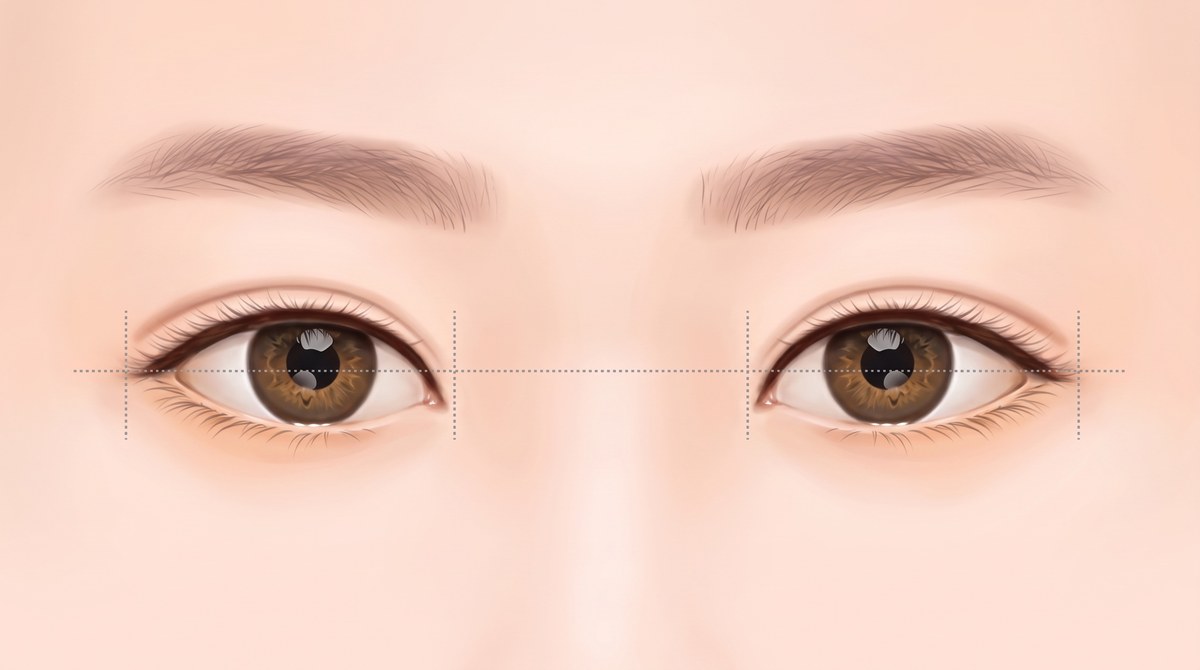
This illustration demonstrates evaluating the horizontal length of the eyes and the distance between them. The dotted lines indicate the positions of the inner and outer corners of each eye. This is an AI-generated image provided for illustrative purposes.
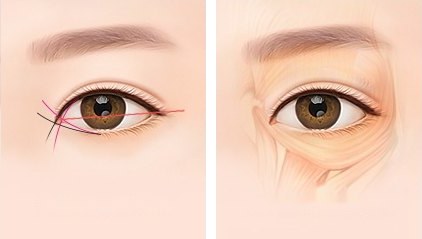
The illustration on the left shows the epicanthal fold and the angle of the outer corner, while the one on the right shows the periocular muscles and fat.
These are the precision analysis criteria for eyelid surgery on the APEX Plastic Surgery website. The items actually evaluated may vary depending on the condition of your eyes.
We Also Assess Asymmetry Between Both Eyes
In many cases, the two eyes are not completely identical to begin with. If the eyelid-opening strength on one side is weaker, that eyelid covers more of the pupil, making that eye look smaller and sleepier. Therefore, during consultation, we separately compare the eyelid-opening strength, double eyelid line height, and eyebrow height of both sides. Even if your concern is with only one eye, we evaluate both eyes together to determine the surgical approach.
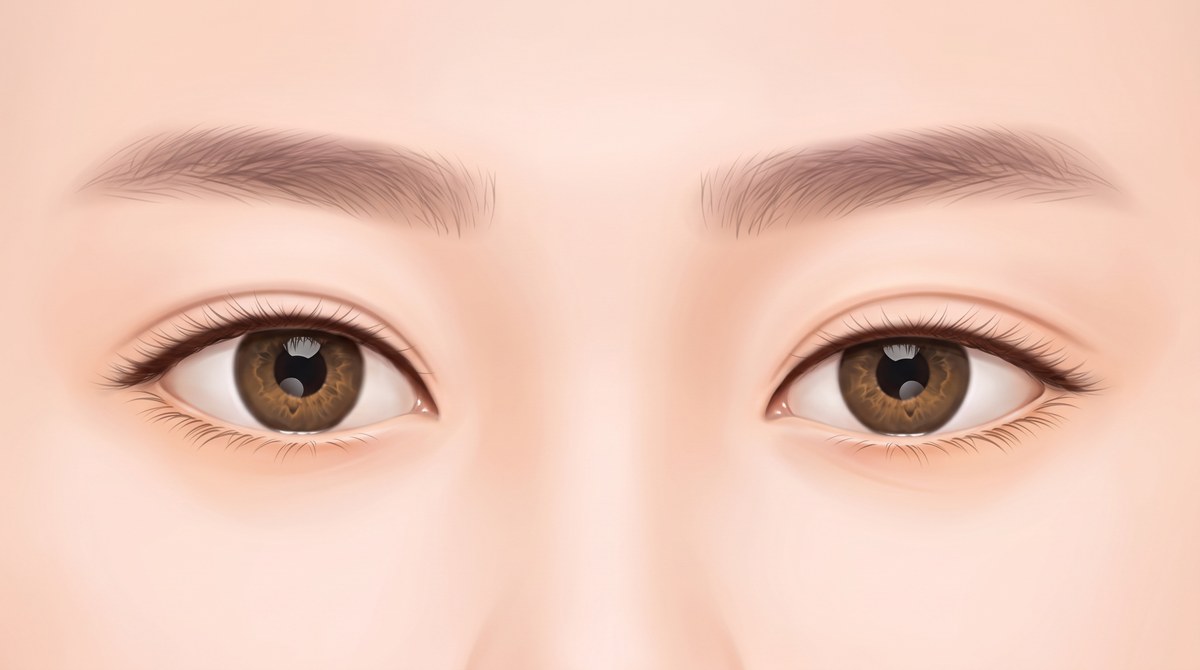
This illustration shows asymmetry between the two eyes. The eyelid of the eye on the right covers slightly more of the pupil, making it appear smaller and sleepier. This is an AI-generated image provided for illustrative purposes.
If You Have Had Prior Eye Surgery, We Start with That History
Some patients seek consultations for concerns following prior surgery—such as unraveling double eyelids, folds that are too high or too low, asymmetry between sides, or eyes looking smaller than before surgery. In these cases, we first check when and with what technique the surgery was performed, and what currently causes discomfort. This is because, even for the same concern, the surgical approach varies depending on the cause of the previous surgical outcome.
For example, if ptosis was present but only double eyelid surgery was performed without ptosis correction, or if a relatively high double eyelid line was created on a horizontally short eye, the eyes may appear smaller. In such cases, ptosis correction or canthoplasty is considered.
The timing for revision surgery is also evaluated. It typically takes about 6 months to 1 year for adhesions from the previous surgery to resolve and for the eyelid tissue to stabilize, depending on individual eye conditions. However, if there is excessive adhesion from ptosis correction or if adhesion in an undesirable area is anticipated, earlier correction may be considered.
APEX Plastic Surgery's Eye Revision Surgery·Canthoplasty standards. The actual method is determined after an examination.
Helpful Things to Note Before Your Consultation
To discuss your eye condition thoroughly during the consultation, it is helpful to organize your concerns in advance.
- Your primary concerns — What your concerns are, such as a sleepy look, heavy appearance, outer eye corners, or asymmetry
- Desired impression — The desired look or impression, such as clear, defined eyes or a soft, gentle expression
- Eye discomfort — whether you strain your forehead when opening your eyes, whether your eyelids feel heavy, or whether your eyes feel dry
- Prior surgeries and procedures — if you have had eye surgery before, the timing and technique
- Health status — underlying medical conditions and current medications
Please keep in mind — Possible side effects following surgery include bleeding, infection, inflammation, scarring, asymmetry, loosening of the double eyelid line, overcorrection or undercorrection from ptosis correction, re-adhesion of canthoplasty sites, and dry eye sensations. Swelling, bruising, the recovery process, and progress vary by individual. Specific precautions are explained in detail during your consultation.
For eyelid surgery, a thorough consultation comes first
“Although many perceive eye surgery lightly, almost like a simple procedure, eyelid surgery requires some of the most delicate technique in all of plastic surgery; thus, it is crucial to determine the surgical plan best suited to your condition through an in-depth consultation with medical staff.” — Song Hyun-seok, Lead Surgeon
Frequently Asked Questions
Can I bring photos of my desired eyes to the consultation?
They can serve as a helpful reference for explaining your desired aesthetic. However, the eyes in a photograph differ from your own in eyelid thickness, levator muscle strength, and eye length.
Whether the same look suits your eyes and face will be determined together after an examination.
Will double eyelid surgery alone improve eyes that look closed-in?
It depends on what makes them appear closed-in. If epicanthal folds cover the inner corners or the horizontal eye length is short, canthoplasty can be considered; if levator function is weak, ptosis correction can be considered alongside it.
If ptosis is present, performing double eyelid surgery alone may actually make the eyes look smaller, which is why this is assessed first during the consultation.
Are asymmetrical eyes also evaluated during the consultation?
We evaluate levator muscle strength, crease height, and eyebrow position separately for each side. If ptosis affects only one eye, that eye may appear smaller and sleepier.
Both eyes are naturally slightly asymmetrical, and some difference between the left and right may remain after surgery. During the consultation, we discuss how to address these differences.
I previously had eye surgery; when can I have revision surgery?
Revision surgery is generally considered about 6 months to 1 year after the previous procedure, once tissues have stabilized. However, earlier correction may be considered depending on the specific concern.
If you share the timing and method of your previous surgery, we will determine the timing together during the consultation.
What are the surgery duration and recovery period?
It varies by procedure. At APEX Plastic Surgery, canthoplasty takes about 30 minutes, sutures are removed after 5 days, and recovery takes about 7 days. Revision eyelid surgery takes about 1 hour, sutures are removed after 5 days, and recovery takes about 1 week. Both are performed under local anesthesia with sedation, and hospitalization is not required.
The guidelines for double eyelid surgery and ptosis correction were covered in the Double Eyelid Surgery Methods Column and Ptosis Correction Column. These details may vary depending on the patient's condition and surgical technique.
In eyelid surgery, we examine your current eyes before choosing a desired shape
What we examine first during consultation
- Root cause of concern — where sleepiness, a closed-in appearance, eye corner angle, and sagging originate
- Eyelids and levator muscle strength — the condition of skin and fat, and whether ptosis is present
- Eye length and spacing — horizontal length, distance between the eyes, epicanthal folds, and outer corners
- Asymmetry between sides — levator muscle strength in both eyes, and crease and eyebrow heights
- Prior surgeries — surgical timing and technique, and current discomforts
- Facial harmony — whether the eye shape harmonizes with facial proportions and your overall impression
At APEX Plastic Surgery, board-certified plastic surgeon Dr. Song Hyun-seok provides all consultations and treatments.
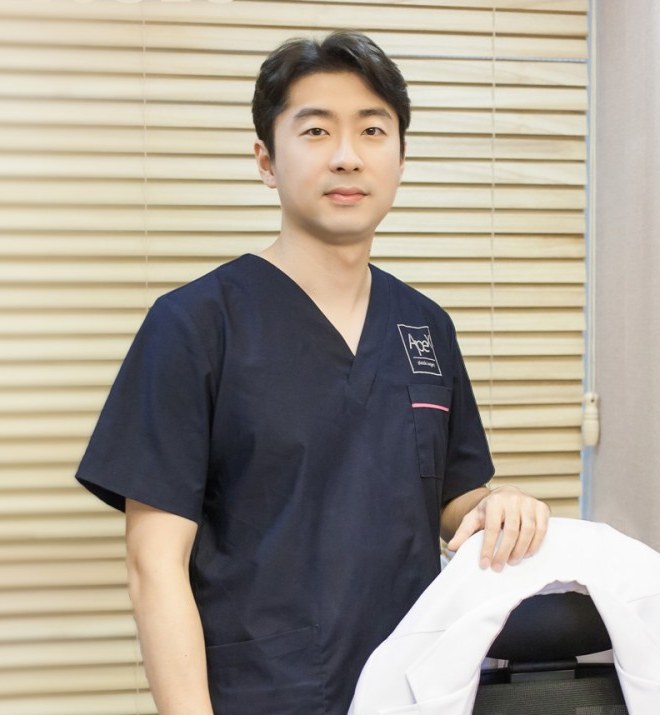
Song Hyun-seok, Head Director · Board-Certified Plastic Surgeon, Ph.D.
This article is provided for medical informational purposes only, does not guarantee specific treatment outcomes, and does not replace consultation with a physician. The featured image, the eye length and spacing illustration, and the eye asymmetry illustration are AI-generated images to aid understanding and do not depict real individuals; the remaining eye diagrams are also illustrations for explanatory purposes. None of the images in this article are before-and-after comparison photos. Surgical duration, anesthesia, and recovery times are based on the procedure guides on the APEX Plastic Surgery website and may vary by individual. Potential postoperative complications such as bleeding, infection, and inflammation may vary in severity among individuals, so care must be taken. Please ensure you receive a thorough consultation, full explanation, and provide informed consent prior to surgery.
APEX CUSTOMER CENTER
Phone number :
02-3453-7907
Clinic Hours
Weekdays
AM 10 : 00 ~ PM 7 : 00
Saturday
AM 10 : 00 ~ PM 4 : 00
(Closed Sundays and holidays)
Subway Line 2, Yeoksam Station Exit 4, Hanjungang Building 3F
The two buildings are adjoined; please enter through the right-hand door.
(The right-hand building with KT on the 1st floor)
How do I make a reservation?
You can book by phone at our main number, 02-3453-7907.
Can I get a consultation in Japanese?
You can reach us via our official Instagram (@apexjapan_official) or X (@apex_surgery).
日本 SNS

Clinic Name : APEX Plastic Surgery
Address : 3F Hanjungang Bldg., 139-1 Teheran-ro, Gangnam-gu, Seoul (646-7 Yeoksam-dong)
CEO : Song Hyun-seok Business Registration No. : 220-10-15955 TEL : 02-3453-7907 FAX : 02-3453-7908
Copyright ⓒ 2026 APEX Plastic Surgery. ALL Rights Reserved.
Apex
[Summit, top]
APEX means ‘the summit,’ ‘the very top.’
with the finest medical technology and a systematized surgical process
our commitment to uncovering the hidden beauty unique to each patient
It embodies the spirit of APEX Plastic Surgery.


