APEX Column
APEX Column
Brought to you by APEX Plastic Surgery
Explore plastic surgery insights and stories.
Differences Between Buried Suture, Partial Incision, and Incisional Double Eyelid Surgery: Choosing the Right Method for Your Eyelids
Date : 2026-10-20
Views : 44
Double eyelid surgery is broadly divided into the buried suture method (non-incisional), partial incision method, and full incision method. Which method is suitable is determined by looking at the eyelid skin thickness, degree of sagging, amount of fat, and eye-opening strength. A method that worked well for someone else will not necessarily be right for your eyes.
The eyes are an important feature that determines first impressions, so even subtle differences in eye shape can change the impression of the entire face. For this reason, quite a few people decide on a surgical method in advance based on stories from acquaintances or information seen online—for example, wanting the buried suture method simply because a friend had it. However, if your eyelid condition is different, the same surgical method may not be suitable. Here is a summary of how the three surgical methods differ, which eyelids call for which method, and what to check during a consultation.
AI-generated image for illustrative purposes.
Eye Plastic Surgery Involves Various Procedures Beyond Double Eyelid Surgery
Eye plastic surgery can be broadly divided into upper eyelid surgery and lower eyelid surgery. Upper eyelid surgery is exemplified by double eyelid surgery, ptosis correction to fix eyelids that do not lift sufficiently due to weak eye-opening strength, and canthoplasty such as epicanthoplasty and lateral canthoplasty. Lower eyelid surgery includes under-eye fat repositioning, which addresses under-eye fat.
- Double Eyelid — Surgery that creates a crease where the skin folds when opening the eyes (Non-Incisional·Hybrid·Incision)
- Ptosis Correction — Surgery that reinforces the strength of the eye-opening muscle (Non-Incisional·Incision)
- Canthoplasty — Surgery that widens the inner or outer corners of the eyes (Canthoplasty)
- Transconjunctival Fat Repositioning — Surgery that repositions or trims bulging fat under the eyes (Transconjunctival Fat Repositioning)
The difference between ptosis correction and double eyelid surgery was covered in our previous eye surgery column. This time, we look at the criteria for choosing a double eyelid surgery method.
Three Criteria That Determine the Double Eyelid Surgery Method
When deciding on a double eyelid surgery method, the eyelid condition is examined first. Eyelid skin thickness and sagging, the amount of eyelid fat, and the strength of eye opening are the criteria that determine the surgical method.
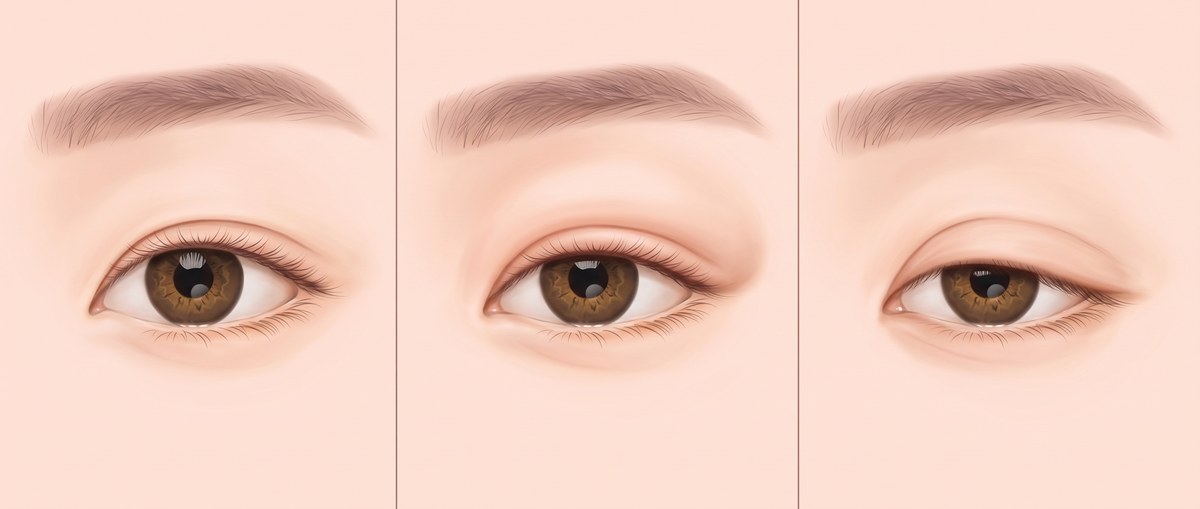
From left: thin eyelids, thick eyelids with a lot of fat, and sagging eyelids covering the eyelashes. All three are eyes without double eyelids, and the surgical method considered varies depending on eyelid condition. This is an AI-generated image to aid understanding.
- Skin thickness and sagging — If the skin is thick, a line created with the buried suture method can easily come undone. If the skin is sagging, the double eyelid line must be set relatively higher, making the buried suture method difficult.
- Amount of fat — If eyelids are thick due to excessive eyelid fat, a method of trimming fat through an incision is considered.
- Eye-opening strength — If ptosis is present due to weak eye-opening muscles, ptosis correction is considered depending on the severity. If moderate or severe ptosis is present, surgery is performed using the incisional method.
In summary, When the eyelids are thin with little fat and ptosis is mild, buried double eyelid surgery or non-incisional ptosis correction can be considered. When skin is sagging, eyelids are thick, or ptosis is severe, the incisional method is considered.
Here is the key point — Rather than focusing on which surgical method is best, you should first look at the condition of your own eyelids.
The Buried Suture Method (Non-Incisional Double Eyelid) Is Considered for Thin Eyelids
The buried suture method creates a double eyelid line by tying knots with sutures through tiny needle holes without cutting the skin. APEX Plastic Surgery's non-incisional double eyelid surgery creates six microscopic openings according to the design and continuously secures them with fine sutures. As tissue adhesions form where secured with sutures, a double eyelid line is created.
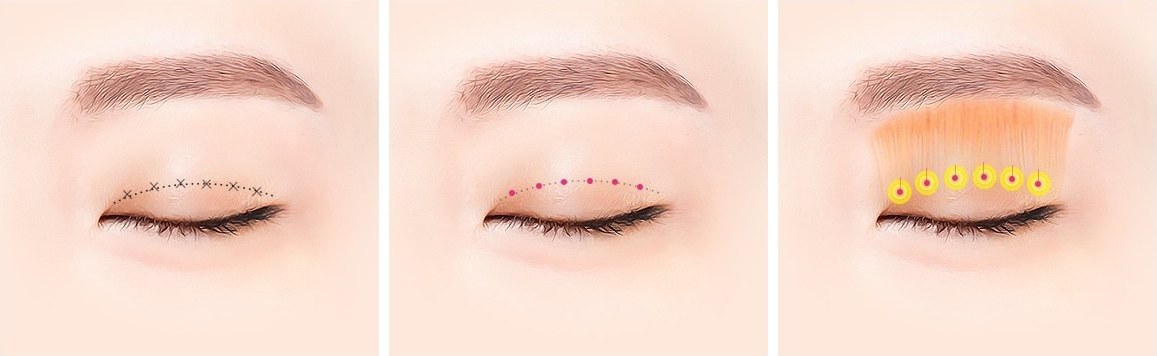
This is the non-incisional double eyelid procedure. From left: designing the crease height, creating microscopic openings, and tissue adhesion forming where secured with sutures.
- Method — Sutures are inserted through microscopic openings without skin incisions to tie knots, creating a line through tissue adhesion
- Eyelids considered — Eyelids with thin skin and minimal fat, or when incisional surgery feels burdensome
- Points to note — If the skin is thick, the line can easily loosen; if skin is heavily sagging or ptosis is severe, correction with only the buried suture method is difficult
The Partial Incision Method (Hybrid Double Eyelid) Is Between the Buried Suture and Incisional Methods
The partial incision method is an intermediate form between the buried suture and incisional methods. Through a small incision, excessive fat and muscle are trimmed, and like the buried suture method, the double eyelid line is fixed with sutures before closing. At APEX Plastic Surgery, this procedure is performed as Hybrid Double Eyelid Surgery.
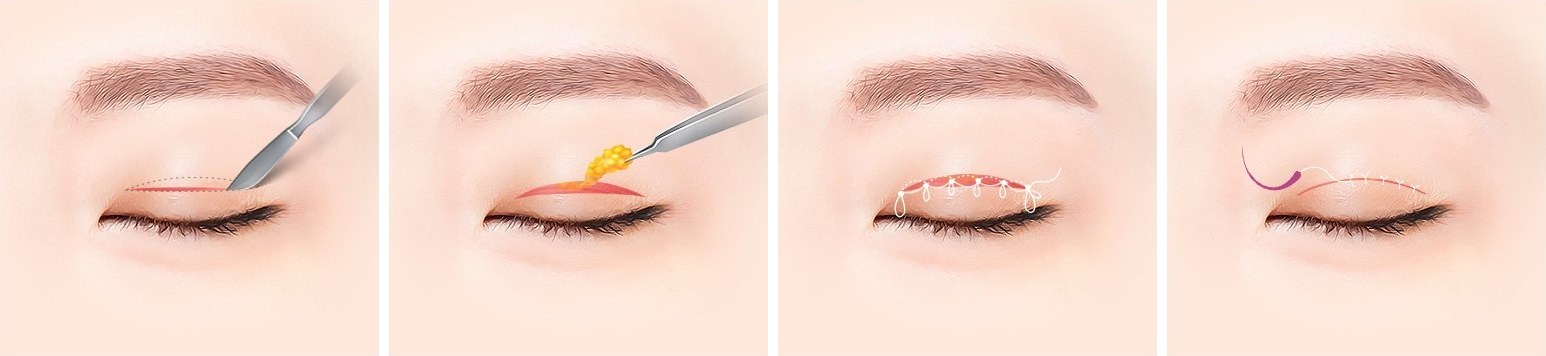
This is the Hybrid Double Eyelid procedure. From left: minimal incision, trimming fat and muscle, fixing the line with sutures, and suturing, which may vary depending on the individual.
- Method — Excessive fat and muscle are trimmed through a small incision, and the line is fixed with sutures before closing
- Eyelids considered — Eyelids with slight skin sagging or slightly thick skin, concerns that the line might loosen with the buried suture method, or when full incisional surgery feels burdensome
- Points to note — A thorough evaluation is required if skin sagging or ptosis is severe. Suture removal is required because an incision is made
The Incisional Method (Incisional Double Eyelid) Is Considered for Sagging or Thick Eyelids
The incisional method creates a double eyelid line by making an incision along the eyelid and removing skin, muscle, and fat as needed. APEX Plastic Surgery's incisional double eyelid surgery secures the line by suturing the tarsal plate and an extension of the levator palpebrae superioris muscle together. If necessary, ptosis correction is also performed to correct drooping eyelids.
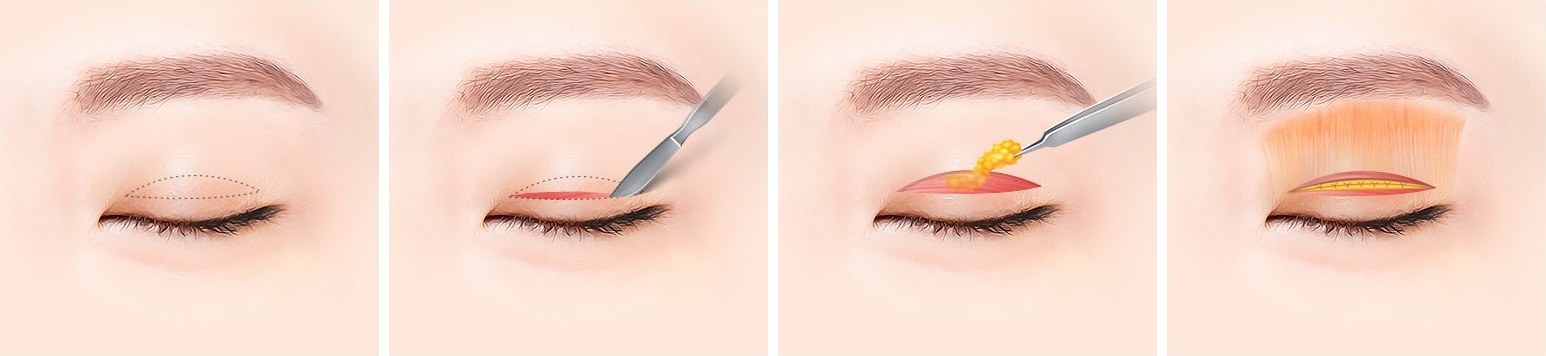
This is the incisional double eyelid procedure. From left: design, incision, trimming skin, muscle, and fat, and line fixation and suturing, which may vary depending on the individual.
- Method — Incising the eyelid to remove skin, muscle, and fat as needed, and suturing the tarsal plate to an extension of the levator palpebrae superioris muscle to secure the line
- Eyelids considered — Eyelids with sagging or thick skin, eyelids with excessive fat or muscle, cases requiring removal of sagging skin, or presence of moderate to severe ptosis
- Points to note — Swelling may last longer than with the buried suture method, and an incision line remains
APEX Plastic Surgery's Non-Incisional Double Eyelid·Hybrid Double Eyelid·Incisional Double Eyelid standards. The actual method is determined after an examination.
The shape and height of the double eyelid line are also determined together
Along with the surgical method, the double eyelid line is designed. Double eyelid creases are classified into in-fold, in-out fold, semi-out fold, and out-fold depending on where they begin at the inner corner of the eye, and into low, medium, and high creases depending on height.
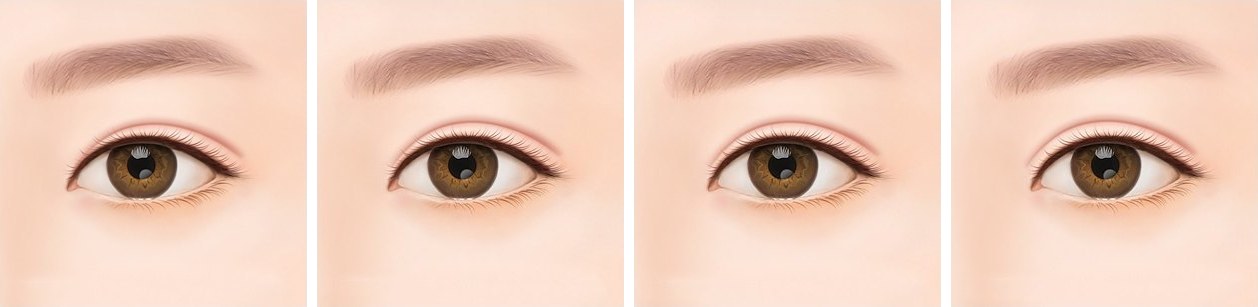
Crease shapes according to where the double eyelid line starts. From left: in-fold, in-out fold, semi-out fold, and out-fold.
Because the impression of the eyes changes depending on the crease's shape and height even with the same surgical method, the choice is made considering both facial features and the desired look. At APEX Plastic Surgery, more than 20 minutes are dedicated to designing the double eyelid line.
Please keep in mind — Postoperative complications such as bleeding, infection, inflammation, scarring, asymmetry, loosening of the double eyelid crease, and dry eye sensation may occur. Swelling, bruising, the recovery process, and progress vary by individual. Specific precautions are explained in detail during your consultation.
Your eyelid condition comes before anyone else's surgical method
“Because the overall facial impression changes depending on the shape of the eyes, blindly insisting on someone else's surgical method can lead to regrettable results; therefore, it is best to choose a method suited to oneself following the diagnosis and advice of a specialist.” — Song Hyun-seok, Representative Director
Frequently Asked Questions
Which is better, the buried suture method or the incisional method?
Rather than one being better than the other, the appropriate method differs depending on the eyelid condition. If the eyelid skin is thin with little fat, the buried suture method is considered; if the skin is sagging or thick, or if ptosis is severe, the incisional method is considered.
Who is considered for the partial incision method?
It is considered when a full incision feels burdensome yet there is concern that the crease might loosen with the buried suture method, or when the skin is slightly thick or has mild sagging.
If skin sagging or ptosis is severe, the consultation will examine whether another method is more appropriate.
I would like to have it done using the same method as my friend; is that possible?
Eyelid skin thickness, the amount of fat, and eyelid-opening strength vary from person to person. Even with the same surgical method, it may not be suitable if the eyelid condition differs, so the method tailored to your eyes is decided after an examination.
My double eyelid done with the buried suture method came undone; can I have the buried suture method again?
If the crease has loosened after previous surgery with the buried suture method, or if skin sagging is anticipated, the partial incision or full incision method is considered.
For problems that develop after a previous surgery, the cause is identified first before deciding on the surgical method (Eye Revision Surgery).
What are the surgery duration and recovery period?
At APEX Plastic Surgery, non-incisional double eyelid surgery takes about 30 minutes, stitch removal is either not needed or performed between days 1 and 5, and the recovery period is about 3 to 5 days. Hybrid double eyelid surgery takes about 30 minutes, stitches are removed after 5 days, and recovery is about 5 to 7 days. Incisional double eyelid surgery takes under 1 hour, stitches are removed after 5 days, and recovery is about 5 to 7 days.
All three are performed under local or twilight anesthesia and do not require hospitalization. Details may vary depending on the patient's condition and surgical technique.
The double eyelid surgical method is determined by assessing the eyelids
What we examine first during consultation
- Eyelid skin — Eyelid skin thickness and degree of sagging
- Eyelid fat — Amount of upper eyelid fat and muscle
- Eyelid-lifting strength — Presence and severity of accompanying ptosis
- Prior surgeries — Whether a line created with the buried suture method has loosened previously
- Desired crease — Shape and height of the double eyelid line
- Facial harmony — Harmony with facial proportions and features
At APEX Plastic Surgery, board-certified plastic surgeon Dr. Song Hyun-seok provides all consultations and treatments.
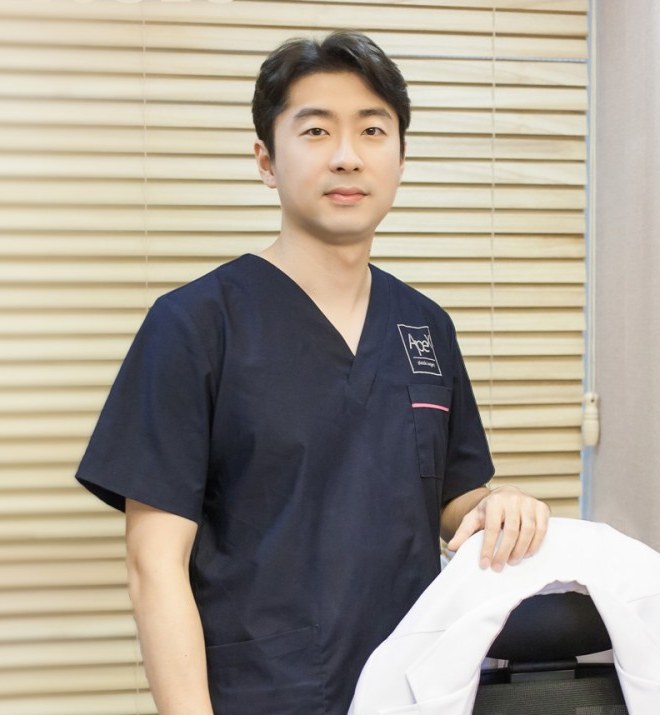
Song Hyun-seok, Head Director · Board-Certified Plastic Surgeon, Ph.D.
This content is intended solely for medical informational purposes, does not guarantee specific treatment results, and does not substitute for consultation by a medical professional. The main image and eyelid comparison drawings are AI-generated illustrations to aid understanding and do not represent actual individuals; the remaining eye diagrams are also explanatory illustrations. None of the images in this article are before-and-after comparison photographs. Details regarding surgery time, anesthesia, and recovery periods are based on the procedural guidelines on the APEX Plastic Surgery website and may vary by individual. As general postoperative complications such as bleeding, infection, and inflammation may vary in degree depending on the individual, caution is advised. Please ensure you receive thorough consultation, explanation, and provide informed consent prior to surgery.
APEX CUSTOMER CENTER
Phone number :
02-3453-7907
Clinic Hours
Weekdays
AM 10 : 00 ~ PM 7 : 00
Saturday
AM 10 : 00 ~ PM 4 : 00
(Closed Sundays and holidays)
Subway Line 2, Yeoksam Station Exit 4, Hanjungang Building 3F
The two buildings are adjoined; please enter through the right-hand door.
(The right-hand building with KT on the 1st floor)
How do I make a reservation?
You can book by phone at our main number, 02-3453-7907.
Can I get a consultation in Japanese?
You can reach us via our official Instagram (@apexjapan_official) or X (@apex_surgery).
日本 SNS

Clinic Name : APEX Plastic Surgery
Address : 3F Hanjungang Bldg., 139-1 Teheran-ro, Gangnam-gu, Seoul (646-7 Yeoksam-dong)
CEO : Song Hyun-seok Business Registration No. : 220-10-15955 TEL : 02-3453-7907 FAX : 02-3453-7908
Copyright ⓒ 2026 APEX Plastic Surgery. ALL Rights Reserved.
Apex
[Summit, top]
APEX means ‘the summit,’ ‘the very top.’
with the finest medical technology and a systematized surgical process
our commitment to uncovering the hidden beauty unique to each patient
It embodies the spirit of APEX Plastic Surgery.


